Holding It Down at Home: Life As A LA County Firefighter Family
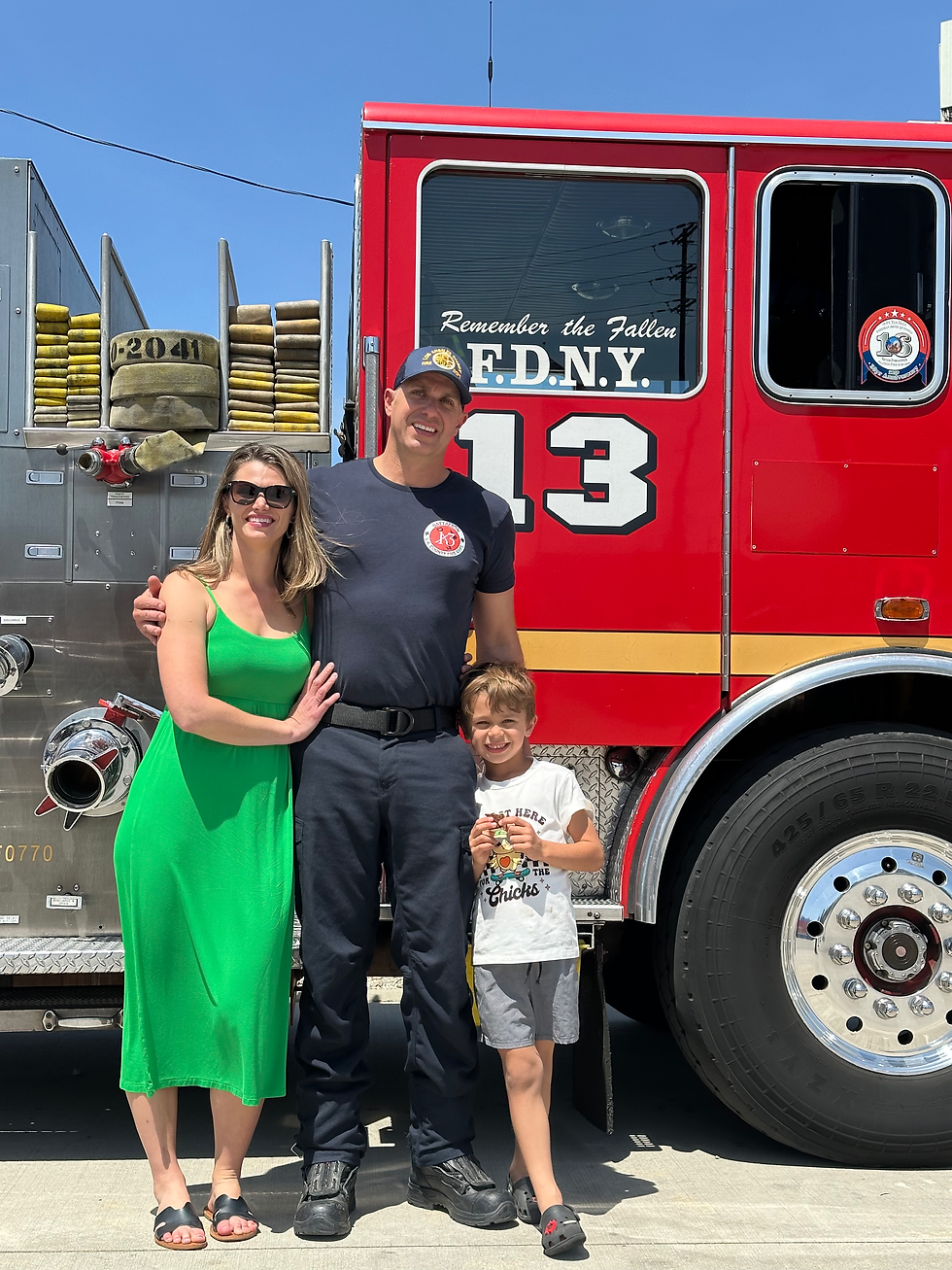
For LA County firefighter families, the shift calendar is the first thing on the fridge and the last thing anyone forgets. The schedule runs on a repeating rotation of days on the job and days at home, and built into it is the recall, a force hire that can erase a planned day off with little notice. One parent leaves for a shift while the other runs the house, the kids, the meals, and everything that does not stop just because someone is at the station. There is no single version of this life. There are stay-at-home parents, spouses working full-time careers, newlyweds still learning the rotation, and families with four kids and a dog. What they share is the schedule, and what the schedule asks of them is steady.
That steadiness gets built one shift at a time. The one at home is not waiting for the firefighter to come back so life can start again. Life is already running. Homework, sports, the dinner that has to happen whether or not anyone has slept. This article is about what that looks like, who carries it, and why the families behind LA County firefighters deserve to be seen.
What the LA County firefighter schedule actually looks like
Los Angeles County Fire Department firefighters work what is known as a modified Kelly schedule, a repeating 12-day rotation of shifts on and days off. The pattern is as follows: 24 hours on, 24 hours off, 24 hours on, 2 days off, 24 hours on, 24 hours off, 24 hours on, and 4 days off. This schedule repeats itself in indefinitely. The county publishes the official shift calendar each year so families can see exactly which days fall where.
On paper, the rotation looks predictable, and that predictability is part of what makes fire family life workable. The calendar goes on the fridge, and the household plans around it months out. What the calendar does not show are the recalls. Every position needs to be staffed 24 hours a day, 7 days a week. When a position needs to be filled, a firefighter can be forced to work on a scheduled day off, and a day the family had counted on disappears, sometimes with little notice. The spouse at home absorbs that change, rearranging childcare, canceling plans, and carrying the day solo. The schedule sets the rhythm. The recall is the reminder that the job does not always keep to it.
Why the off days are not like everyone else's weekend
A firefighter's time at home does not line up with the rest of the working world, and that mismatch shapes everything. Researchers found that the schedule itself is one of the biggest factors in family well-being, because it determines how often a firefighter is home and present for the ordinary rhythm of family life. When the schedule wins, and it usually does, the family builds around it.
That means birthdays land on shift days. Holidays get celebrated early, late, or twice. The spouse at home learns to be the constant, the one who is there for the school pickup, the fever at 2 a.m., the appliance that breaks the moment the firefighter pulls out of the driveway. A 2024 review of firefighter shift work and parenting described the family rhythm as a pendulum, swinging between long stretches of concentrated time together and stretches apart. Fire families do not fight that swing. They plan their lives around it, and they stay flexible for the moments no calendar can predict.
There is no single version of a fire family
The household running on this schedule looks different from one driveway to the next, and that variety is the point. For the stay-at-home parent, a shift means solo parenting from the morning routine to bedtime without their significant other, and a recall can stretch that solo run longer than was planned. For the spouse with a full-time career, it means two calendars that rarely line up, juggling their own job while covering the gaps the schedule leaves behind. For the newer couple, it means a steep learning curve. One fire spouse described her first encounter with the schedule as a complete shift in how she understood time, where a single day had to account for everything.
Then there are the families with young children, where the firefighter comes home and has to be caught up on everything that happened while they were gone, a kind of re-entry that the firefighters themselves describe as one of the hardest parts of the job. Across all of these, the firefighters polled in that 2024 review agreed on one thing without exception: the support and flexibility of their spouse or partner was essential to making any of it work. Different homes, different days, same job underneath it all. Keep the home steady so the firefighter can do the work.
What holds a fire family together
Ask any fire family what keeps the whole thing standing and the answers tend to be communication. A calendar everyone can see. Clear expectations about who handles what while the firefighter is on shift. The families who do this well have systems, and they lean on that system while staying loose enough to handle a recall that rewrites the week.
They also lean on each other. Fire families tend to find their people, other families who understand why dad missed the recital or why mom worked through Thanksgiving, who can step in with a casserole or a carpool without being asked twice. Children in these homes grow up understanding that a parent works while most people sleep, and that the work matters. That understanding is not a burden handed down.
None of this erases the strain. The research is clear that shift work carries real costs, from sleep loss to missed milestones to the stress that builds when one person carries the home for days at a stretch. Naming that strain plainly is part of respecting the people who live it.
Support that reaches the whole family
Awareness comes first. When a department, a community, and a family all understand that the firefighter's schedule shapes the entire household, the conversation changes. Support stops being something the spouse has to ask for and starts being something the community offers.
Peer connection matters too. Other fire families are often the first to understand what a hard stretch feels like, and that shared understanding is its own kind of resource. Family-focused services, including counseling built around the realities of shift work, have become more common and more accepted across the fire service in recent years. Knowing those options exist is a meaningful starting point for any family carrying this load.
How the LA County Firefighters Welfare Fund stands behind fire families
The LA County Firefighters Welfare Fund has spent more than 75 years standing behind the firefighters who serve the LA County Fire Department and the families who hold things together at home. We exist because the job reaches the whole household, and when a fire family hits a hard moment, someone should be there. That is the work the fund was built to do.
If the families behind the badge matter to you, we would be proud to have you in our corner. Follow us on Instagram and Facebook, and if you are moved to give, your donation goes directly to the LA County firefighters and families who need it most.
[ Donate Now ]