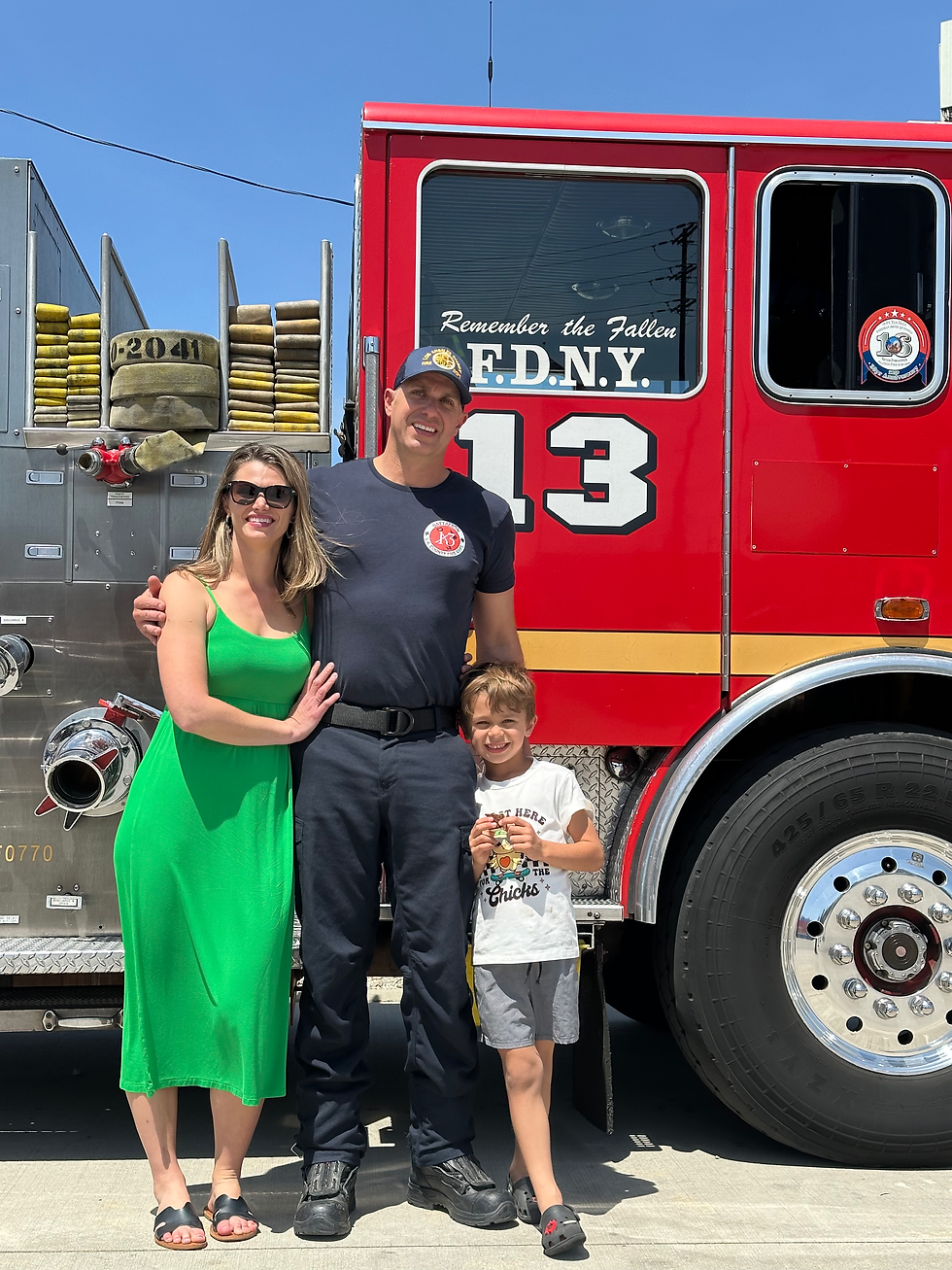
June Is Men's Mental Health Awareness Month: Why It Hits Close to Home in the Fire Service
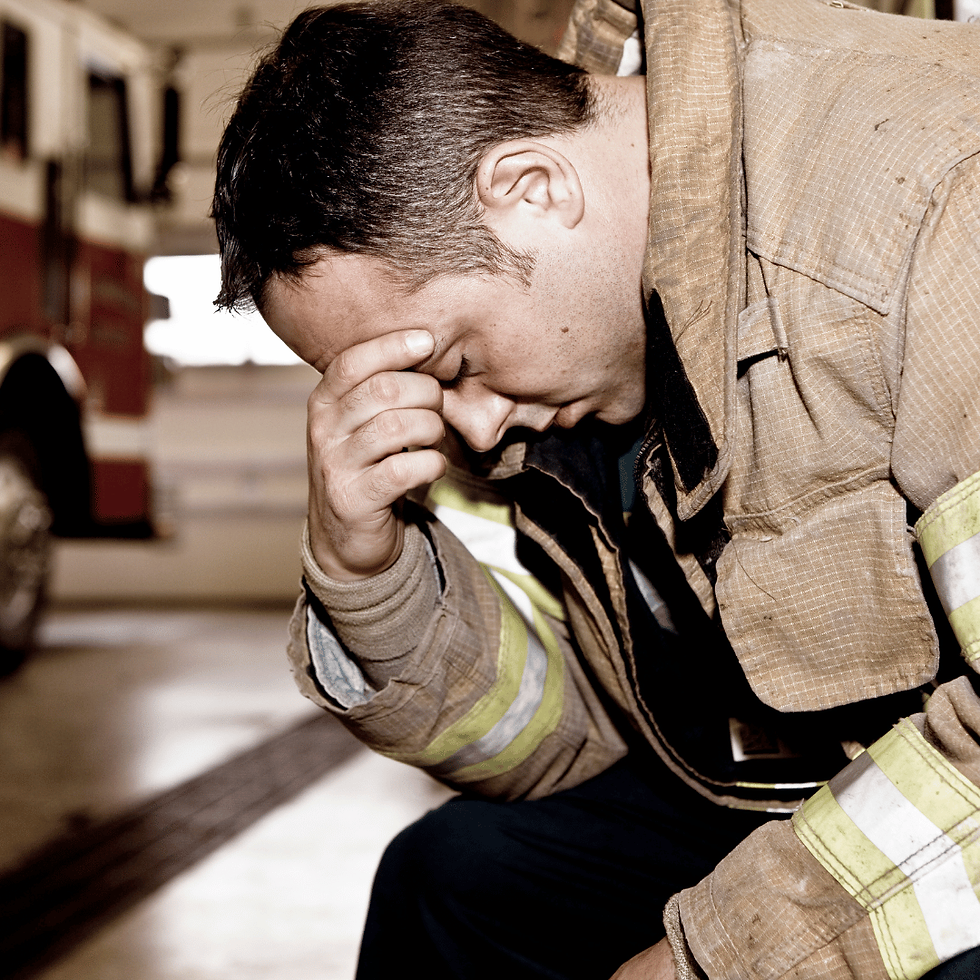
June is Men's Mental Health Awareness Month, a national observance focused on the unique mental health challenges men face and the barriers that keep them from seeking help. For the fire service, where the workforce is overwhelmingly male and the culture rewards composure under pressure, the month carries added weight. Research shows men die by suicide at far higher rates than women and seek treatment far less often, and firefighters sit at the sharp edge of both patterns.
Most LA County firefighters are men, and the data on men and mental health tells a difficult story. Men in the United States die by suicide at roughly four times the rate of women, yet they are the least likely to walk into a clinician's office and say something is wrong. Put those two facts next to a profession that runs on toughness, long shifts, and the expectation of holding steady when everyone else is falling apart, and you start to see why this month matters here more than almost anywhere else.
The men who serve LA County communities spend their careers absorbing what most people will never witness. Awareness begins with naming what the research has made clear, then refusing to look away from it.
The Numbers Behind Men's Mental Health
The pattern in the data has held for years. Men account for roughly half the population but close to 80 percent of suicides in the United States, and in 2020 the male suicide rate was about four times the female rate. That gap is not because women experience less distress. Women are diagnosed with depression and anxiety at higher rates and report more suicidal thoughts. Men, in turn, are far more likely to die.
The reasons trace back to how men are raised to handle pain. Research published through the National Institute of Mental Health found that fewer than 42 percent of men with a mental illness receive treatment, compared to nearly 57 percent of women. Symptoms also show up differently. Where depression in women is often described as sadness, in men it frequently surfaces as irritability, anger, fatigue, or substance use, which leads to missed diagnoses and delayed care.
Underneath the statistics sits a cultural script that many men learn early. Asking for help reads as weakness. Staying silent reads as strength. That script costs lives, and it is the exact pattern Men's Mental Health Awareness Month exists to interrupt.
What the Script Looks Like Inside a Firehouse
The fire service draws people who run toward danger and stay calm under conditions designed to break composure. Those instincts save lives on the job. They also make it harder to admit when something is wrong off of it.
A firehouse runs on trust and shared toughness. The same culture that lets a crew move as one through a structure fire can also make a firefighter reluctant to be the one who says he is struggling. Stigma compounds the silence that already runs deep among men, and the result is a workforce carrying cumulative exposure to trauma while feeling pressure to keep it private.
Researchers have documented how repeated exposure to death and crisis wears on first responders over a career. The Ruderman Family Foundation found that firefighters and police officers are more likely to die by suicide than in the line of duty, pointing to mental illness rooted in constant exposure to death and destruction as the driver. That finding reframes the risk entirely. The danger a firefighter is most likely to face over a long career may not be the fire itself.
What the Data Shows for Firefighters
The firefighter-specific numbers sharpen the picture. A United States Fire Administration study reported a suicide rate among firefighters of roughly 18 per 100,000, compared to about 13 per 100,000 in the general population. A national study out of Florida State University of more than 1,000 firefighters found that nearly half had experienced suicidal thoughts at some point in their careers, and about 16 percent reported one or more suicide attempts.
These figures almost certainly understate the true scope. The Firefighter Behavioral Health Alliance estimates that a large share of firefighter suicides go unreported, which means the confirmed counts are a floor, not a ceiling. For a profession that is overwhelmingly male, the men's mental health crisis and the firefighter mental health crisis are not two separate stories. They are the same one.
Why Physical Health and Mental Health Are the Same Conversation
Mental health does not live in isolation from the body, and for firefighters that connection runs deep. The work disrupts sleep on a structural level, floods the system with stress hormones on repeat, and wears on the endocrine system over a career. Research on shift workers and first responders has linked chronic disruption of the body's stress response to mood, energy, focus, and long-term health, which means what shows up as a mental health symptom sometimes starts as something physical.
This is where staying on top of bloodwork earns its place. Routine labs, including hormone panels, give a firefighter a baseline and a way to catch shifts early rather than guessing at why something feels off. Numbers on a page are not a diagnosis, but they are information, and information is what turns a vague sense of running on empty into something a person can act on with the right guidance.
Finding a provider who understands the job matters as much as the labs themselves. A physician who knows what a firefighter's body absorbs over twenty or thirty years of shift work, exposure, and accumulated stress reads those results through a different lens than one who does not. That understanding is worth seeking out.
Taking care of the body is not separate from staying strong. It is part of how a firefighter builds resilience and protects the long career ahead. Decisions about labs, hormone health, and treatment belong between a firefighter and a qualified medical provider, and the men reading this are encouraged to have those conversations.
What Awareness and Support Can Look Like
Naming the problem is where change starts, and the fire service has begun to do exactly that. Peer support programs, chaplaincy networks, and behavioral health resources built specifically for first responders have grown across departments nationally, designed by people who understand the culture from the inside rather than asking firefighters to translate their experience for someone who has never lived it.
Research consistently points to the same protective factors: connection, the presence of people a person trusts, and an environment where reaching out is treated as strength rather than failure. For men in particular, the single hardest step is often the first conversation. Awareness months like June exist to make that step a little less lonely, and to remind the men behind the badge that asking for help is something the strongest among them already do.
Standing Behind the Firefighters Who Serve
The LA County Firefighters Welfare Fund exists for the moments after the call ends. For more than 75 years, the fund has stood behind the firefighters who serve LA County communities and the families who stand behind them, providing direct support when life turns heavy. Mental health is part of that picture. The fund does not provide clinical care, but it stands firmly in the corner of a community that gives so much and is finally being met with the recognition that the people behind the badge deserve.
If the firefighters who protect LA County matter to you, we would be glad to have you with us. Follow the fund on Instagram and Facebook, and if you are moved to give, your donation goes directly to the firefighters and families who need it most.