The Health Crisis Facing Firefighters: What Occupational Cancer Research Tells Us

Occupational cancer is the leading cause of death among firefighters in the United States, responsible for the majority of career line-of-duty deaths. Research shows that firefighters face elevated risks for multiple cancer types due to repeated exposure to carcinogens on the job, a reality that has lasting consequences for the firefighters themselves and the families who stand behind them.
Now, when most people picture the dangers of firefighting, they picture the immediate danger. The heat, the flames, the smoke, and the split-second decisions made inside of a burning structure. Those dangers are real, and they are visible.
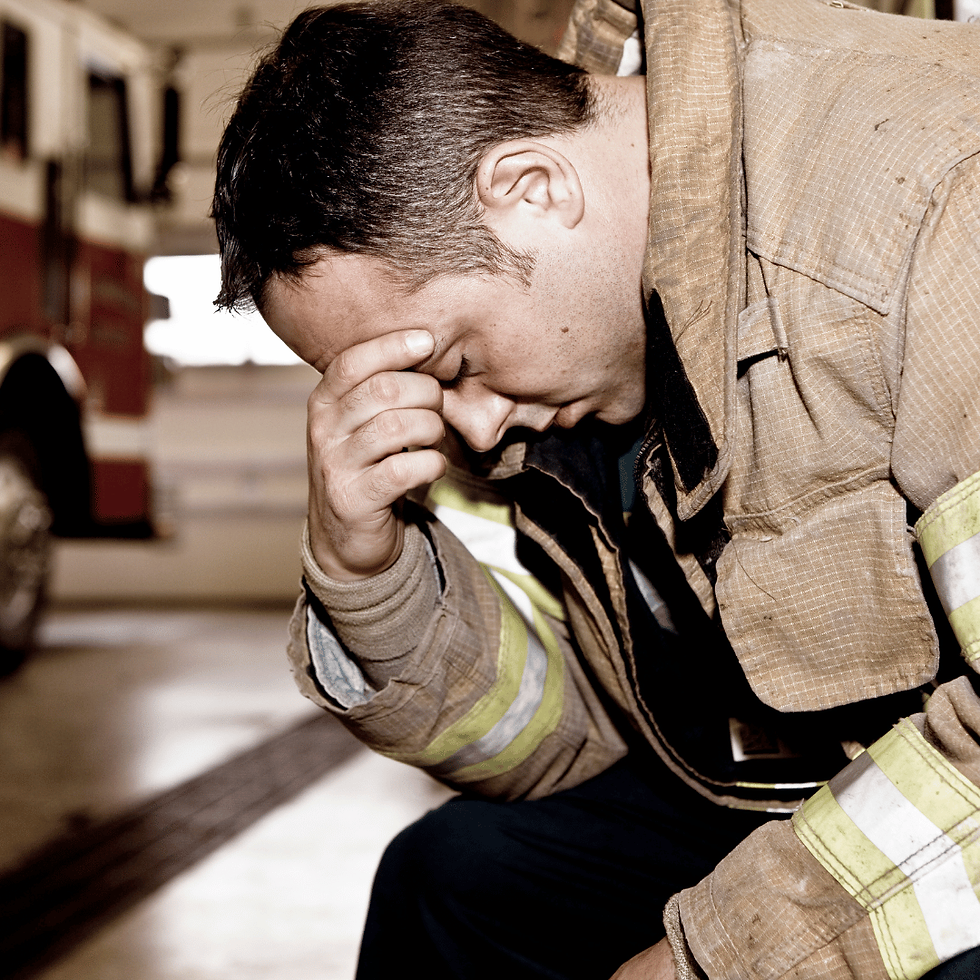
But the threat that is taking the most lives in the fire service today is invisible. It arrives slowly, sometimes years or even decades after the fire is out. It shows up in lab results, in oncology waiting rooms, in conversations no firefighter or family member ever wanted to have. Occupational cancer has become the defining health crisis of the modern fire service, and understanding what the research shows is the first step toward supporting the people who carry this risk every day they go to work.
For the more than 5,000 active and retired firefighters who serve Los Angeles County, this is not an abstract issue. It is a reality woven into the fabric of the job.
What the Research Shows About Occupational Cancer
The science on this topic has become increasingly clear over the past two decades. In 2023, the International Agency for Research on Cancer (IARC), a division of the World Health Organization, completed one of the most comprehensive reviews of the scientific literature ever conducted on this subject. The conclusion was unambiguous: occupational exposure as a firefighter is carcinogenic to humans, classified as a Group 1 carcinogen. Group 1 is the highest designation IARC assigns, reserved for exposures with the strongest evidence of cancer causation in humans.
A major meta-analysis published in the journal Safety and Health at Work examined data from 16 cancer incidence studies. Researchers found elevated cancer risks across multiple types, including mesothelioma, bladder cancer, prostate cancer, testicular cancer, colon cancer, melanoma, non-Hodgkin lymphoma, and thyroid cancer, compared to the general population.
More recently, the American Cancer Society published findings from a landmark study that followed more than 470,000 firefighters over 36 years. The results showed that being a firefighter increased the risk of mortality from most cancers, with the strongest associations for skin and kidney cancers. That same study reinforced something researchers have flagged for years: because many cancers take decades to develop, the full scope of this occupational risk often does not become visible until long after a firefighter has retired.
Why are firefighters at such elevated risk?
Firefighters may inhale, ingest, or have skin contact with known carcinogens such as polycyclic aromatic hydrocarbons and benzene, and exposure to firefighting activities leads to increased levels of a variety of toxic chemicals in the body. The problem has worsened over time because modern buildings and their contents burn differently than structures built decades ago. Plastics, synthetic materials, and chemical flame retardants release a more toxic mix of combustion byproducts than traditional building materials, increasing the carcinogenic burden on anyone who responds to structure fires regularly.
Research also points to factors beyond direct chemical exposure that may compound a firefighter's cancer risk over a career. Studies in occupational health literature suggest that chronic sleep deprivation from irregular shift schedules may be linked to immune suppression and increased inflammation, both of which researchers have associated with higher cancer risk. Persistent inflammation, which some research identifies as a biological response to repeated toxic exposure, may create conditions in the body that make it harder to detect and fight abnormal cell growth. Researchers and occupational health experts note that the physical demands of the job, the disrupted sleep cycles, and the cumulative inflammatory burden may contribute to a cancer risk that builds over time in ways that go well beyond any single exposure event.
The Reality Inside the Fire Service
The statistics that have emerged from this research have changed how the fire service understands risk at a fundamental level. For generations, the job's most feared threat was traumatic injury or death on the fireground. That understanding has shifted.
Cancer caused 66 percent of career firefighter line-of-duty deaths from 2002 to 2019, and heart disease accounted for 18 percent during that same period, according to data from the International Association of Fire Fighters. Cancer is not a secondary concern. It is the primary one.
In 2025, nearly 80 percent of IAFF member line-of-duty deaths were due to occupational cancer. That number has climbed steadily as research has improved the ability to identify and document cancer cases linked to firefighting. In Canada, where presumptive cancer laws are more comprehensive, close to 94 percent of professional firefighter line-of-duty deaths are attributed to occupational cancer. The gap between those numbers and the U.S. figure likely reflects a documentation problem as much as a medical one.
Firefighters have a 9 percent higher risk of being diagnosed with cancer and a 14 percent higher risk of dying from cancer than the general U.S. population, according to research by the CDC's National Institute for Occupational Safety and Health. For specific cancer types, the disparities are even sharper. NIOSH research found a twofold increase in mesothelioma, a rare and aggressive cancer, among firefighters compared to the general population.
Departments across the country have updated decontamination protocols, invested in gear cleaning equipment, and shifted the cultural norms around what it means to come home from a fire with a dirty uniform. What was once considered a badge of honor, gear as dirty as possible, is now understood as a potential cancer risk to the individual firefighter, coworkers, and family members.
What Families Experience
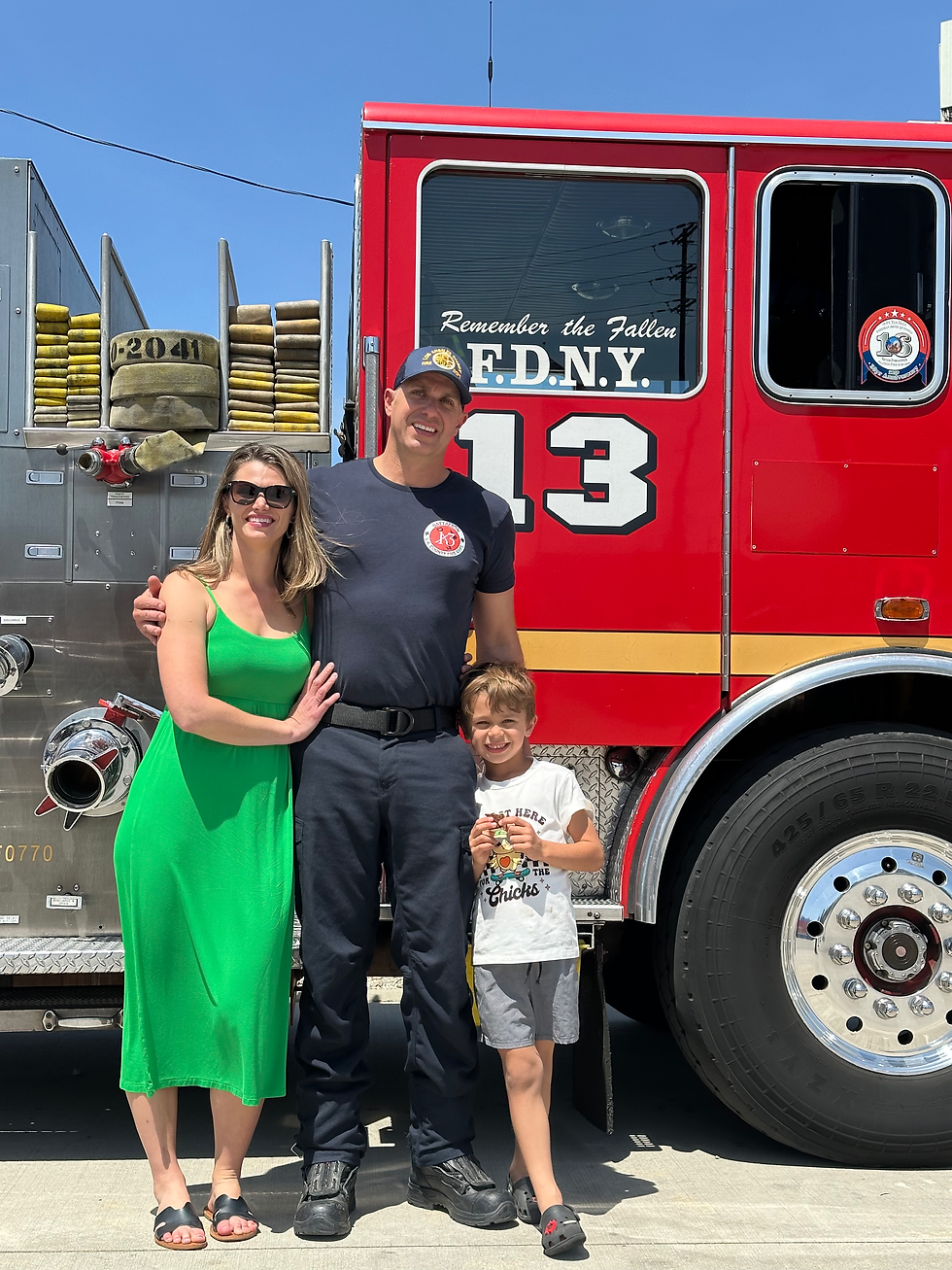
The occupational cancer crisis does not belong to firefighters alone. It belongs to every person who loves them.
For the spouses, children, and parents of firefighters, cancer can feel like an adversary that arrives without warning and settles in for the long term. The firefighter who walked into burning buildings throughout a career may be decades removed from active duty before a diagnosis arrives. The gap between exposure and illness means families are often caught off guard, unprepared for what a cancer diagnosis brings financially, emotionally, and practically.
Firefighter families often carry the weight of this reality quietly. The culture of the fire service has historically emphasized toughness and self-reliance, which means that health concerns can be minimized or ignored until they become undeniable. Spouses describe watching their partners push through symptoms, resist screenings, and defer difficult conversations about their health. By the time a diagnosis comes, the family is already navigating a crisis they did not see building.
The financial dimension is significant. Cancer treatment, including surgery, chemotherapy, radiation, and follow-up care, is expensive even with health insurance, and the road is often long. When the firefighter is also the family's primary earner, a serious diagnosis can destabilize a household quickly. Lost income, medical bills, and the cost of caregiving can accumulate faster than any family anticipates.
This is the human side of what the research documents. Behind every statistic is a firefighter who served this community, and a family that was there for every shift, every call, every year of that career.
California's Legal Framework and What It Means
California has taken meaningful steps to recognize the link between firefighting and occupational cancer through its presumptive cancer law. Under California Labor Code Section 3212.1, known as the William Dallas Jones Cancer Presumption Act of 2010, cancer that develops or manifests in a firefighter during their period of service is presumed to have arisen from their employment if the member can demonstrate exposure to a known carcinogen as defined by IARC.
This matters because it shifts the burden of proof in workers' compensation cases. Without the presumption, a firefighter would need to demonstrate that their cancer was specifically caused by job-related exposure, an extraordinarily difficult bar to meet given how cancer develops. With the presumption in place, the burden shifts to the employer to prove that the cancer was not work-related.
The presumption extends beyond active service, covering firefighters for up to 120 months after leaving, depending on length of employment, a recognition of the long latency period of many occupational cancers.
For firefighters in Los Angeles County, understanding this protection is important. And for families navigating a cancer diagnosis in the household, knowing that legal support exists is part of navigating the road ahead. Consulting a qualified attorney who specializes in California workers' compensation for firefighters is always the recommended first step for families seeking to understand their specific options.
The Ongoing Research and the Road Ahead
The science continues to advance. The Fire Fighter Cancer Cohort Study has enrolled more than 6,200 participants from over 275 departments across 31 states, including California, the state with the largest enrollment, and is conducting long-term research into exposures, mechanisms, and risk across firefighter subgroups including women and wildland firefighters. This kind of research is essential. It will take years of longitudinal data to fully understand which exposures drive which cancers, and to develop the targeted interventions that can reduce risk at the source.
The LA wildfires of early 2025 added new urgency to these questions locally. Researchers testing firefighters who responded to those fires found elevated levels of lead and mercury in their blood, reinforcing concerns about toxic exposure during major structure and wildland events in Southern California. The health consequences of that response will likely take years to fully understand.
What is clear is that the firefighters who protect communities across Los Angeles County carry a burden that extends far beyond the shift they are working. They carry it in their bodies, and their families carry it with them.
How the LA County Firefighters Welfare Fund Stands Behind This Community
The LA County Firefighters Welfare Fund exists because firefighters and their families face moments when they need support that goes beyond what any department can provide. When a cancer diagnosis arrives, whether during active service or years after retirement, the financial and practical pressures on a family can be immediate and severe.
The fund provides direct financial assistance to the firefighters and families in our community during their most difficult moments. We are not a government agency, not affiliated with any department, and not a union. We are an independent 501(c)(3) nonprofit with more than 75 years of history standing behind the men and women who serve the Los Angeles County Fire Department. That mission does not change when the emergency is medical rather than structural.
Support the Firefighters and Families Who Need It Most
The research is clear about the risks firefighters carry. What is less visible is what happens to their families when those risks become real.
If you believe the people behind the badge deserve support when cancer and other occupational health challenges present themselves, your donation makes a direct difference. The LA County Firefighters Welfare Fund is a 501(c)(3) nonprofit and your gift is tax-deductible. Every dollar goes directly to the firefighters and families who protect our community and need our support in return.